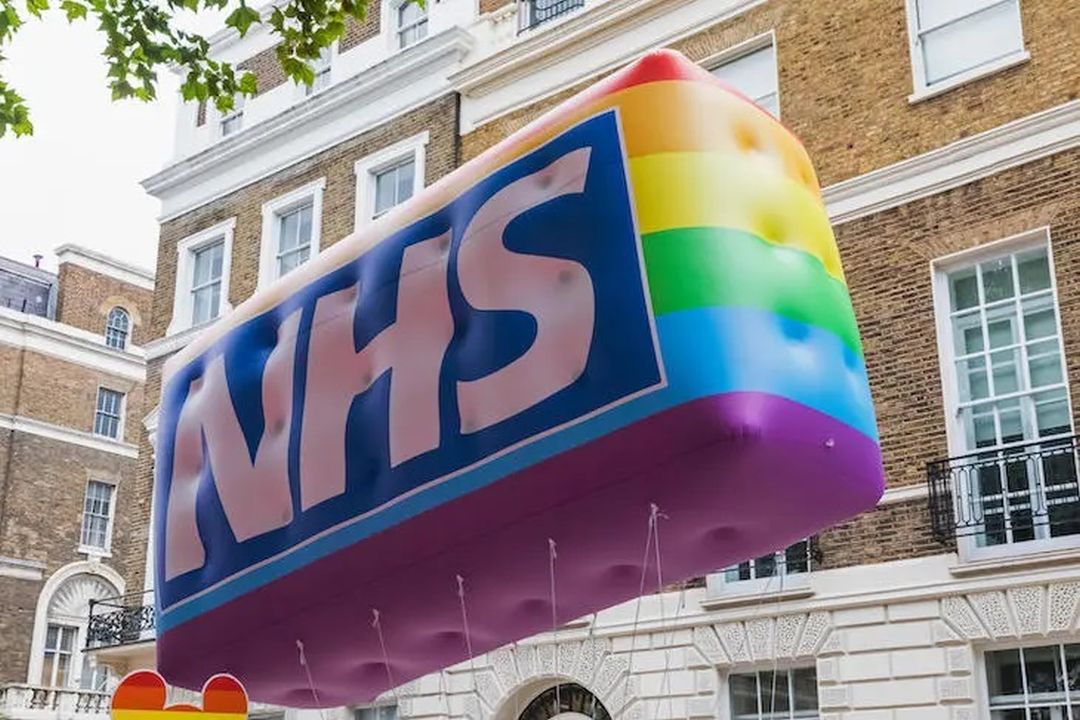
The Tavistock’s notorious Gender Identity Development Service (GIDS) clinic in London – which prescribed puberty blockers to children – closed in March. Two replacement clinics have already opened in London and Liverpool. NHS England has now confirmed they will be joined by six more, starting with Bristol this coming autumn and a centre for the East of England by March 2025. The NHS is under immense pressure; should it really be spending money on these clinics?
The waiting list for gender services is already enormous. There are currently 5,700 children in the queue for specialist gender care, including a child under the age of five. Even if the NHS opened dozens of clinics where children could be sent to discuss their gender, and perhaps seek advice about social transitioning, demand would outstrip supply.
It hasn’t always been this way. As recently as the 1980s, there were no paediatric gender clinics and no waiting lists. When GIDS opened its doors in 1989 it reportedly treated only two children in its first year of operation. But to misquote (slightly) from the 1989 movie Field of Dreams, ‘if you build it, they will come’. Indeed they did.
In this topsy-turvy world where children – or perhaps, more worryingly, their parents – think that puberty is optional and they can choose to grow up as men or women, it is possible that the provision of treatment has fuelled the demand for it. But now that puberty blockers – and presumably cross-sex hormones – are quite rightly off the table where gender dysphoric children are concerned, what treatment will be on offer in any case?
A certain mystique has built up surrounding ‘trans kids’. In previous generations, children struggling to come to terms with the reality of their sex would have been told to get over it. It seems that most of them did. In 2008, for example, it was reported that, ‘Only 2.5 per cent to 20 per cent of all cases of GID in childhood and adolescence are the initial manifestation of irreversible transsexualism’. We don’t call it Gender Identity Disorder any more. But the condition hasn’t changed – and nor have children.
Children who would otherwise have been left to grow up are instead being feted as somehow different, and with a special insight into their so-called gender identity. There may be no drugs on offer (for now), but there is a risk of setting these young people apart from the rest of their peer group. Talk of social transition and the lure of cross-sex hormones at the earliest opportunity – likely to be no later than 18-years old – will affect their mental and emotional development, if not their physical development.
The correct number of NHS paediatric gender clinics is therefore not one, nor two and certainly not eight; it is zero. If those services have nothing to offer but promises that can never really be delivered they should have no place in a publicly-funded health service. Children deserve better than a place on a waiting list to a clinic for specialist treatment to divide them from the muggles. Youngsters in psychological distress face a long wait for specialist gender care. But when they get to the front of the queue, they are likely to find that the treatment they receive does not necessarily make them any happier.
Debbie Hayton is a teacher and journalist.
Her book, Transsexual Apostate – My Journey Back to Reality is published by Forum
* This article was first published by The Spectator on 8 August 2024: Should the NHS really be spending money on child gender clinics?

 Debbie Hayton
8 replies on “Should the NHS really be spending money on child gender clinics?”
I thought this whole fiasco had been debunked! What about the Cass Report? BBC: “The Cass report , published on 10 April, looked at gender identity services for under-18s in NHS England. It found gender medicine to be operating on “shaky foundations ” when it came to the evidence for medical treatment like prescribing hormones to pause puberty or to transition to the opposite sex.20 Apr 2024.”
LikeLiked by 2 people
Where I disagree with Cass is the provision of the regional hubs. If the only treatment for youngsters suffering “gender distress” is psychotherapy and watchful waiting then local mental health services should be able to support them. I worry that these hubs will become magnets for those children (and their parents) and once there they will be left in limbo, without the treatment they crave. Doesn’t seem like a good idea to me.
LikeLiked by 1 person
I agree. While the Cass Report was important, it didn’t analyse the fundamental social phenomenon or emphasize biological reality. It still referred to “trans” or “transgender” children and, as you say, advocated more treatment centres. The hormone interventions were out, except in clinical trials, IIRC, so perhaps kids will still be part of a medical experiment, but at least we’ll gather data on how well, or badly, they fare.
And I agree that local mental health care is the right service, which probably needs this complete change in understanding. I was shocked to be reminded that GIDS stands for Gender Identity Development Service. The “Development” part of it is a tragedy. It literally defines the service’s remit as developing clients’ gender identity, when their sanity depends on restoring their psychic acceptance of their sex (within a context of permissive, flexible “gender” roles and behaviours). And the tragic irony is that “GID” is the abandoned clinical understanding we once had: Gender Identity Disorder. Part of the Woke agenda is to remove any categories that suggest human problems: people are just “diverse”, but nobody’s suffering is properly understood or addressed; their minority differences just acquire additional, impotent and often damaging “rights”.
LikeLiked by 1 person
Debbie, from your book it is clear that there are children who feel an intense attraction to become the opposite sex. As you wrote, keeping those feelings under control was like holding a beach ball under water. However, it is also clear that being trans has become a fad among kids. The task seems to be to separate one group from the other so that each group can get the right kind of support. The kids with innate trans feelings should be treated differently from the kids who just like the idea of being different.
But it isn’t just the kids, is it? Increasingly, I think that adults are fueling the fad. I suspect that the large numbers of school children who decide they are trans wouldn’t be so large if teachers weren’t telling them that they can choose their gender. That may have stopped in the UK (has it?), but it hasn’t stopped in the decentralized education system of the U.S. And to make matters worse, we don’t have a government organization telling doctors not to give “transitioning” drugs to kids, so that is still happening.
The thing that makes this situation so disturbing is that those “woke” adults who think they are doing children a favor by telling them they have “options” which they don’t really have, don’t have the sense to understand that if they give that message to the wrong kids, harm can be done.
A comparison with homosexuality is apt here. Modern teachers will probably say that gay kids should feel free to be themselves. Now, if some straight kids are inadvertently encouraged to try homosexuality, that won’t do them any harm. All they have to do to discover that they aren’t really gay is to try gay sex. But experimenting with changing genders is a whole different thing — kids can be harmed.
All levels of government need to get out of the business of “transing” kids. Furthermore, “woke” parents who like the idea of having a “special project” in their lives need to be educated.
LikeLiked by 1 person
Agreed. It is a fad.
LikeLiked by 1 person
While I agree with some of this, it raises some questions for me. First is the dichotomy you present between two types of kids – those with “innate trans feelings” and those who “like the idea of being different.” I saw this as posing an interesting question for Debbie (perhaps one you didn’t intend). I could read this as suggesting that there are “real trans kids” and “fake”/confused ones.
I don’t want to put words in Debbie’s mouth, but of course we know she falls into the first class of having – if the word “innate” is debatable – at least strong and persistent “trans feelings”.
I wonder what you would respond to this point, Debbie, because it seems a central puzzle in the whole issue. While I would never want to prohibit entirely the solution to gender distress of transition, I’m irked by the suggestion this leaves, of true transness in some people.
LikeLiked by 1 person
Debbie will want to answer this. My answer is metaphysical, which doesn’t satisfy many people. I believe in reincarnation, and that the incoming soul chooses its gender before gestation begins, but sometimes chooses wrongly. Each soul must ultimately experience being a male and a female. Because women have been second-class citizens throughout history, but also because of the pain of childbirth, some souls avoid incarnating as females for too many lives. They reach a point where the need for the female experience (for their spiritual growth) has become too strong, and so develop trans feelings in an effort to get at least some of that experience.
But there’s another scenario: Perhaps in another life Debbie was a church official, or a government official, who persecuted trans people. Debbie would need to experience being trans in order to learn the wrongness of persecuting people for their sexual differences.
Now, if you haven’t read Debbie’s book Transgender Apostate, it is quite obvious from reading it that Debbie had these feelings from a young age. My admiration for Debbie is that she hasn’t caved to the temptation of believing that being trans makes her somehow special and bestows on her special rights. Indeed, I think this desire to be special leads a lot of unhappy, unloved and insecure people down the rabbit hole of transgenderism when they aren’t really trans.
LikeLiked by 1 person
I do not think that there is a group of people with some special quality, “transness”. But there are people with psychological disorders that compel them to present in a way similar to the other sex. We need a more curious approach to understand the conditions so that they can maybe live with them without turing their lives upside down and the lives of those around them.
LikeLiked by 1 person