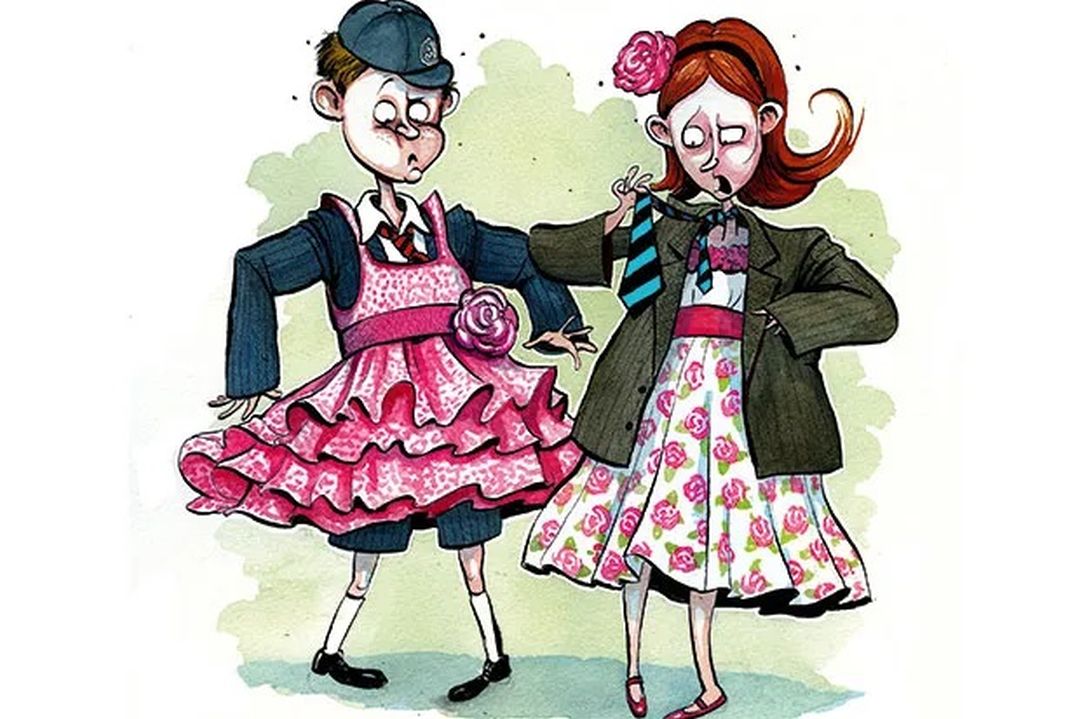
The government has finally published its transgender guidance for schools.* Teachers have been waiting a long time. We were promised we would have this document ‘for the summer term’. Well, it has arrived just in time for Christmas. But was it worth waiting for?
On the surface, this long awaited document looks like it will please nobody, upset everyone and leave schools still unclear about what they should do when parents get on the phone and explain that their son John is now their daughter Janet. It’s all well and good to advise that schools do not have a duty to let children change their gender identity but, when it happens as a fait accompli, what can schools do?
Schools can hardly refuse to use a child’s new name when it has been changed officially by that young person’s parents. Unless, of course, the government plans to issue a list of names acceptable for each sex.
According to the guidance, schools should not allow boys who identify as girls to play sport with girls, where ‘physical differences between the sexes threatens the safety of children.’ The guidance also makes clear that separate sex toilets for children over eight should be provided. But – quite frankly – those things should never have been happening in any case. Indeed, we already have legislation – The School Premises (England) Regulations 2012 – that requires separate toilet facilities for boys and girls aged eight years and older. I’m not sure what this non-statutory guidance adds in that department. Apart, possibly, from pointing out the blindingly obvious – that being a boy or a girl is rather more than a feeling in a child’s head.
A key plank of this new guidance is that schools should inform a child’s parents if their son or daughter wants to ‘change their gender’ in school, except in the ‘exceptionally’ rare cases where there is a ‘significant risk’ of harm to the child. Maybe that alone makes this initiative worth it. Some schools – it seems – have been treating gender transition differently to other major issues. That was wrong. School safeguarding policies must insist that parents are called in when their children are struggling with something that can have a devastating impact on mental health. Gender should be no exception.
But back to Janet and John, what can schools do when parents have sanctioned the change of gender? The guidance says that schools should only agree to a pronoun change if they are confident the benefit to the child outweighs the impact on the school community. But teachers also have an opt-out clause. We will not be ‘compelled’ to address children by their preferred pronouns. After the Maya Forstater ruling established that ‘gender critical’ views were a protected philosophical belief, that presumably covers any teacher who refuses to use a child’s new pronouns. But when it is reported that other teachers will refuse to observe the new guidance – because in their minds it goes too far – Janet may well face the prospect of being called a different name in different classrooms.
That may work for adults – I, for example, could not care whether I am described as she/her or he/him – but not, I fear, for vulnerable children. The potential for chaos in schools is all too clear. The line taken by the rest of the class is also uncertain, especially if there is a chance to play off gender affirming teachers against their gender critical colleagues. In my experience, children respond best when the rules are clear, the policy is unambiguous and the sanction for breaking it is known. This guidance offers none of that.
The new document also fails on a structural level. It is non-statutory – the key word is should, rather than must. Schools should do lots of things. For example, state maintained schools should hold a daily act of collective worship. But to make schools comply, legislation is needed.
More positively, the term ‘gender identity’ has been criticised within the document. At best, the term is a lazy label. At worst it gives credence to the concept that we all have some mysterious quality like a gendered soul. It’s unnecessary and unhelpful, and the government should not be using it. Children should not need to claim a gender identity to escape the stereotypes that are applied to their sex.
But on balance – after such a long wait – this guidance is a disappointment. It has the potential to cause confusion and uncertainty in the schools where it is adopted, and will have no direct impact on the schools that choose to ignore it. However, it is better than nothing, and the Tories are responsible for the current situation in schools. Had the party kicked this can yet further down the road, they would have left an incoming Labour government with a blank canvas on which to produce something perhaps far worse. Our young people deserve far better, but that fear alone means I will give this guidance a grudging welcome.
Debbie Hayton is a teacher and journalist.
* This article was first published by The Spectator on 19 December 2023: This transgender schools guidance leaves a lot to be desired.

 Debbie Hayton
5 replies on “This transgender schools guidance leaves a lot to be desired”
I didn’t know schools should provide a daily act of collective worship. However, your statement about that suggests it is also a bit of guidance, a “should”, whereas it seems to be a legal obligation.
From the link: Every school must by law provide religious education and daily collective worship for all its pupils, with the exception of those pupils who are withdrawn from these activities by their parents. It is a matter of deep concern that in many schools these activities do not take place with the
frequency required or to the standard which pupils deserve. The
Government’s aim is therefore to improve the quality of the religious
education curriculum for pupils in order to ensure that they have the best
possible opportunity to develop through this area of the curriculum.
So it seems even passing a law doesn’t guarantee compliance. Laws need policing. (I’m not in favour of this one; children deserve not to have their heads filled with fantasies as if they were reality, but that’s another matter.)
It’s also ironic that this document says: The Education Reform Act 1988 sets out as the central aim for the school curriculum that it should promote the spiritual, moral, cultural, mental and physical development of pupils and of society, and prepare pupils for the opportunities, responsibilities and experiences of adult life.
So schools should be actively discouraging gender transition of any kind, since it undermines those developmental aims.
LikeLiked by 1 person
100% true
schools should start teaching kids about god and jesus instead they teach about all these transgenders. I was in a school that had bible study every day, that’s the way it should be!
LikeLike
Unfortunately, it’s a bit unclear what, in my above comment, was my view and what was my quotation of the governmental document. Just to clarify, I am against teaching religion in schools (at least as factual or referencing human spirit, and, in the case of British schools, with a Christian focus). The document was lamenting the fact that, despite it being a legal requirement in state schools, religious education and worship was being neglected. I messed up the quotes.
I’m happy for each of us to have our own beliefs, and I hope you don’t feel offended, but I see little difference between teaching kids that we have a gendered soul that can be at odds with our body, and teaching them that a man was born of a virgin to save us from our sins, was crucified, came back to life, ascended into heaven, etc. As some kind of historical curiosity, we might talk about it in schools, as we might alert children at a suitable age to the cultural fad of gender identity ideology. But neither has any basis in scientific fact, and we should not be suggesting that we – officialdom, or the country as a whole – advocate any unsupported belief systems whatever.
It is high time Britain stopped reiterating that it’s somehow a “Christian country”, it should divorce itself entirely from the Royal Family, whose power and riches essentially follow from the belief that the monarch has a divine right to their position and is head of the Church of England, and we should establish a clearly secular (although multi-cultural) republican constitution.
LikeLiked by 1 person
Jesus Christ has promised that “whosoever believe in him not perish, but have everlasting life. ” I do not mind children choosing their “gender” I just don’t want it shoved down MY kids throat in school.
LikeLike
It always amazes me that people who, quite rightly are critical of the current torrent of gas lighting that we are being subjected to, get very defensive if you question their belief in a supernatural being. Perhaps the collective worship in schools should be restricted to uplifting tales of heroic actions performed by wonderful human beings. That would be a good way to start the school day.
LikeLiked by 1 person