This has been a year to forget for the transgender lobby. This time last year, Nicola Sturgeon’s SNP government had just forced its Gender Recognition Reform Bill through Holyrood following an acrimonious late night sitting in the run up to Christmas. It seemed likely then that anyone over the age of 16 would be able to change their legal sex much more easily, without the need for a psychiatric diagnosis of gender dysphoria. For some of Sturgeon’s Scottish Green allies, the only regret was that they had not gone far enough. Maggie Chapman MSP suggested that consideration should be given for allowing children as young as eight to be able to take up the offer.
Thankfully, that ludicrous bill was blocked by the UK government before January was out. But the push back did not stop there. Sporting governing bodies have finally remembered why women’s sports were created in the first place. Men and women have different bodies, and feelings in the head do not displace male advantage. During 2023, World Athletics, Swim England and the International Cricket Council updated their policies to protect female sport.
Where administrators were slow to see sense, competitors took action themselves. Four women’s football teams in Sheffield refused to play a team that fielded a transwoman. Meanwhile, on the green baize, Lynne Pinches forfeited a national women’s pool final, rather than play a transgender opponent. Pinches was cheered by the crowd as she walked away. Pool’s governing bodies are now facing a potential sex-discrimination lawsuit from the women they have let down.
At Westminster, after months of dithering, the Tories finally decided against including an LGBT conversion therapy bill in the King’s Speech. It was hardly a priority – abusive and coercive practices are already illegal, and the existing law can deal with them. But it might well have stopped distressed children from getting the help they really need when they had perhaps spent too long on the internet and been convinced that gender transition was the answer to all their problems.
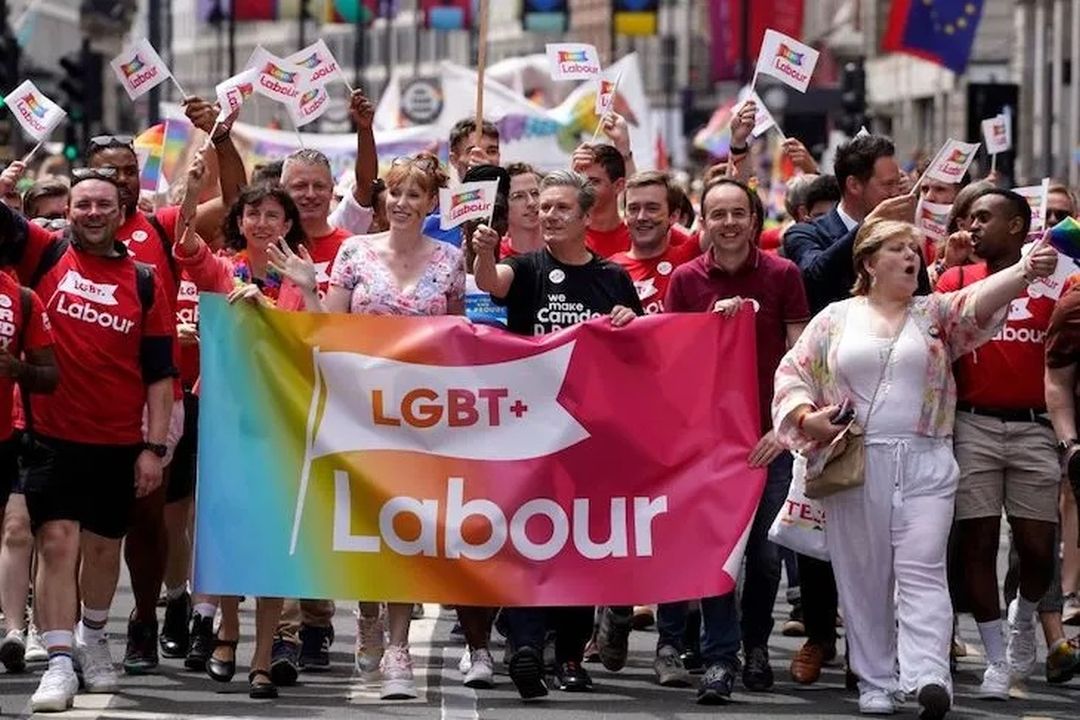
However, the Tory government might not be around much longer. Unless Rishi Sunak subjects the country to a January 2025 election – and a campaign over Christmas – 2024 looks set to herald a Labour government. If the polls are accurate, by this time next year, Keir Starmer will be returned with a thumping majority. If so, we should worry about what a Labour government means for women’s rights – and for trans people. The party’s track record is not good.
Unlike the Scottish Greens, Scottish Labour is supposed to be in opposition in Holyrood. But the party was firmly behind Sturgeons GRR Bill last year; 18 Scottish Labour MSPs backed the bill with only two against. If Starmer takes charge at Westminster, the direction of travel on transgender issues is anyone’s guess. While the party leadership has apparently abandoned support for self-identification, noises are still being made to make it easier to obtain a gender recognition certificate. Why?
According to the Gender Recognition Act – the original one from 2004, which was passed under Labour – ‘where a full gender recognition certificate is issued to a person, the person’s gender becomes for all purposes the acquired gender’. That is a remarkable legal fiction and, what’s more, the change is then veiled in secrecy. Indeed, it is a criminal offence for ‘a person who has acquired protected information in an official capacity to disclose the information to any other person.’ The penalty is an unlimited fine.
So, while Labour might claim to want to protect women’s single-sex spaces, this legislation means that Starmer’s party is likely to find it impossible to practise what it preaches. A party that had properly thought about these issues would hardly pass such a wide-ranging law that has, in the years since, opened up a can of worms. But I fear that Labour policy is being driven by activists and naïve politicians eager to be accommodating to whoever shouts the loudest. Their task is made all the easier by a culture within the party that appears to tolerate no dissent, as Rosie Duffield has found out to her cost.
Duffield has been a beacon of sanity on these matters, but she has suffered appallingly as a result. For three years, she has been hounded, shamed and marginalised after she agreed that only women have cervixes. Earlier this year she dared to ‘like’ a tweet by Graham Linehan that was critical of Eddie Izzard. As a consequence, her name is not currently on the party’s approved list of candidates for the next general election.
If Starmer makes it to Downing Street, the future looks bleak for women. The safeguarding of children also looks to be under threat following Anneliese Dodds’ speech at the recent Labour party conference. The shadow women and equalities secretary pledged to bring in ‘a full, no-loopholes, trans-inclusive ban on conversion therapy.’ What’s more, none of this helps transsexuals like me. Ten years ago, we were quietly getting on with our lives. Not now. Politicians have made a circus out of our rights and protections. If – or when? – Labour get in, that seems likely to get only even worse. We all benefit from governments that make the right decisions, not those that might be politically expedient. If Starmer gets this wrong, then 2024 may be a year we all want to forget.
Debbie Hayton is a teacher and journalist.
* This article was first published by The Spectator on 28 December 2023: A Labour government could spell trouble for trans people like me.



 Debbie Hayton